1. Why pricing matters beyond income
Pricing signals positioning. A nail tech charging £20 for a full gel set is not competing with one charging £55 — they attract different clients, have different expectations, and deliver different experiences. Underpricing doesn't just hurt your income; it attracts clients who are harder to retain, more likely to complain, and least likely to respect your time.
2. Start with cost-based pricing
Cost-based pricing means setting a minimum floor — the price below which you lose money. Your actual price will be above this floor based on positioning, but you need to know the floor first.
- 1
Calculate your hourly cost
Total your monthly fixed costs (products, tools, insurance, platform fees, rent if applicable). Divide by working hours per month. This is your cost per hour. - 2
Add product cost per service
Estimate the product cost for each service type (gel polish, tips, nail art supplies). Many nail techs undercount this — include everything: files, forms, nail prep, top coat. - 3
Factor in your time target
Decide what hourly rate you want to earn for your labour. Add this to your cost. The total divided by the typical service duration is your minimum price. - 4
Add a margin for the unexpected
Price at least 15–20% above cost floor. Equipment breaks. Slow periods happen. You need a buffer.
3. What costs to include
Many nail techs under-count costs and then wonder why they feel underpaid despite being booked. These are the costs most commonly forgotten:
| Cost category | Examples | Often forgotten? |
|---|---|---|
| Products per service | Gel, tips, base/top coat, nail prep, foils | Rarely |
| Consumables | Files, lint-free wipes, forms, nail tape | Often |
| Equipment depreciation | UV/LED lamp, drill, e-file bits | Very often |
| Platform/booking fees | Booking app subscription, payment processing fees | Often |
| Insurance | Professional liability insurance (required for mobile/salon) | Sometimes |
| Marketing | Instagram tools, professional photography, print materials | Very often |
| Continuing education | Courses, new technique training | Almost always |
| Unpaid time | Admin, messages, social media, cleaning up | Almost always |
4. Market positioning and local rates
After establishing your cost floor, research local rates to understand where you sit in the market. Use Google, Instagram, and local Facebook groups to get a picture of what nail techs in your area charge.
| Positioning | Typical range | Client expectation |
|---|---|---|
| Entry / budget | £20–35 full set | Basic service, fast turnaround, no frills |
| Mid-market | £35–55 full set | Consistent quality, good communication, decent portfolio |
| Premium | £55–90+ full set | High-quality products, elevated experience, detailed nail art, strong reputation |
Positioning in the premium tier doesn't require a salon. Many of the highest-earning nail techs in the UK are home or mobile based. Premium positioning is about quality, presentation, and consistency — not location.
6. Pricing nail art and add-ons
Nail art is where most nail techs leave significant money on the table. The mistake is bundling it into the base price or charging a flat "nail art fee" regardless of complexity.
| Complexity | Description | Typical extra charge |
|---|---|---|
| Simple | 1–2 accent nails, solid colour with minimal design | £5–10 |
| Mid | Gradient/ombré, simple patterns, stamping on 3–5 nails | £10–20 |
| Complex | Full-hand designs, characters, 3D elements, full floral | £20–50+ |
| Custom/premium | Hand-painted, bespoke art, competition-level work | Quoted individually |
7. How to raise your prices
Price increases are feared more than they need to be. Most loyal clients accept reasonable price increases when they're communicated clearly and with enough notice.
- 1
Decide on the new price and effective date
Give yourself 4–8 weeks lead time. Don't announce it the week before. Clients who pre-book regularly need time to plan. - 2
Update your booking page first
Change prices on your booking page before announcing publicly. This avoids a rush of bookings at old prices that you then have to honour. - 3
Announce on Instagram and in booking confirmations
Keep the message simple: "From [date], prices for [services] will increase to [amount]. This reflects increased product costs and continued investment in quality." No over-explanation needed. - 4
Message existing regulars directly
Regular clients who haven't heard about the increase may feel blindsided if their next booking confirmation shows a higher price. A brief personal message goes a long way.
8. Displaying prices on your booking page
Public pricing reduces pre-booking friction and filters out price-sensitive clients before they contact you. Clients who book knowing your prices are higher intent and less likely to push back at payment.
✓ Booking page pricing checklist
- ✓Every service has a price visible before the client enters their details
- ✓Nail art pricing is explained clearly (e.g. "from £10 depending on complexity")
- ✓Deposit amount is shown before confirmation
- ✓Prices match what you charge — no surprises at checkout
- ✓Updated within 24 hours of any price change
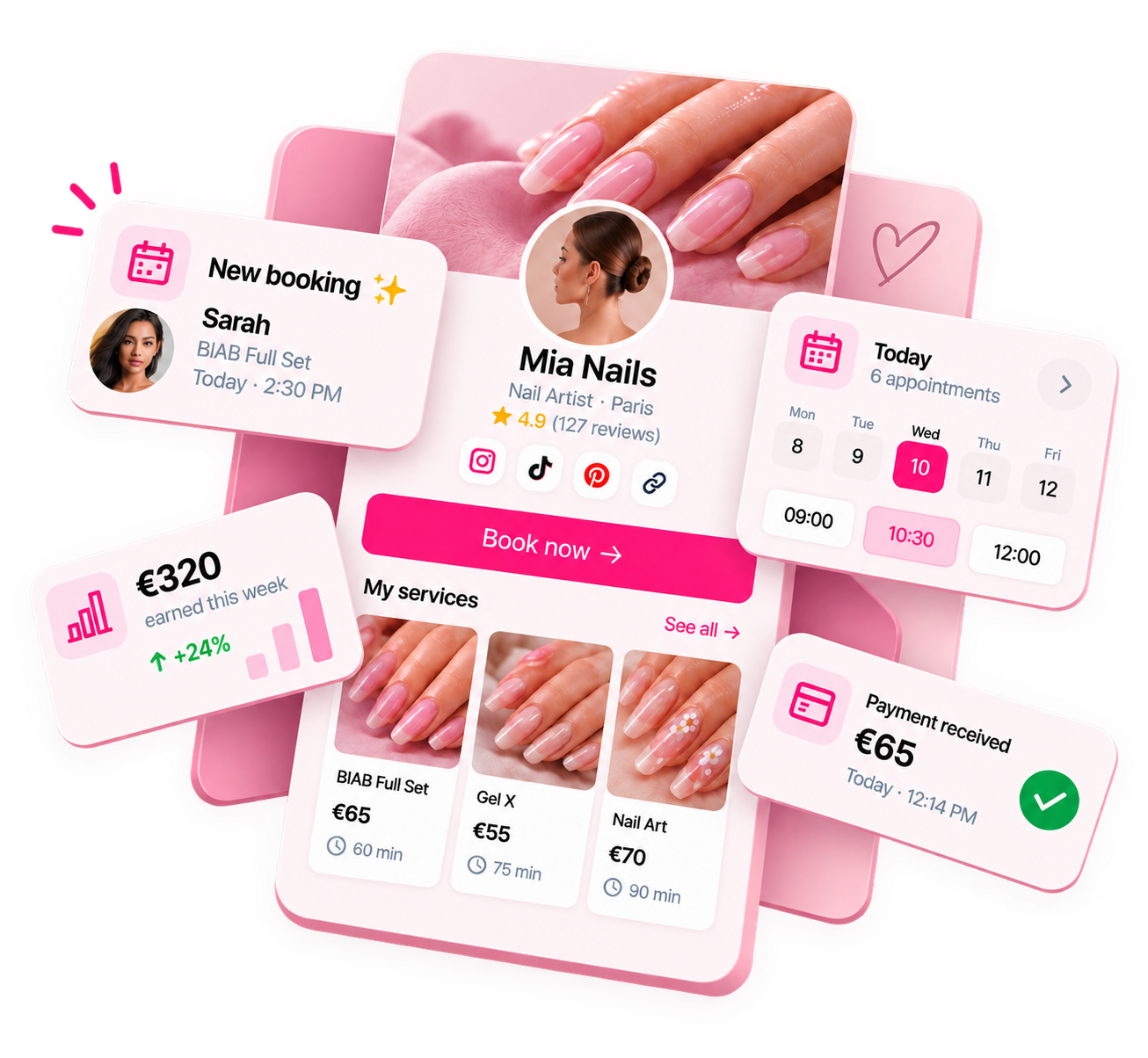
Nelsy booking pages show service prices, duration, and deposit requirements before the client confirms. Transparent pricing at every step.
Useful resources
Ready to run your nail business more professionally?
Manage bookings, deposits and payments from one customisable Nelsy booking page.
Start free →Frequently asked questions
How do I know if my nail prices are too low?▾
If you're fully booked but feel underpaid, if you're turning away bookings more than a week out, or if your prices haven't changed in over a year while your costs have, your prices are likely too low. Being fully booked at low prices means you've underpriced yourself — demand is high enough to support an increase.
Should I list my prices on Instagram?▾
Yes. Clients who know your prices before enquiring are higher intent and less likely to be deterred by a quote later. Hiding prices reduces enquiries overall. Put your starting prices in your bio or a Highlights story.
How much should I charge for nail art?▾
Simple nail art (1–2 fingers, basic design) is usually £5–10 extra. Complex nail art (full hand, hand-painted characters, 3D) warrants £15–40 or more. Charge per finger for custom designs, and be clear in your booking form what's included in the base price.
How do I raise my prices without losing clients?▾
Give 4–8 weeks notice via your booking page, Instagram and confirmation messages. Explain that your costs have increased. Most loyal clients will stay — and the ones who leave at a modest increase were the price-sensitive clients least likely to become long-term regulars anyway.