
Product and supply costs
These are your primary variable costs — they rise with your client volume. Track these per order and average them monthly:
- ✓Gel products (base coat, colour gel, topcoat)
- ✓Acrylic products (monomer, polymer)
- ✓Gel-X or soft gel extension products
- ✓Builder gel / BIAB products
- ✓Nail tips, forms
- ✓Nail art supplies (foils, pigments, studs, decals)
- ✓Nail drills and e-file bits
- ✓Files and buffers (disposables)
- ✓Prep products (dehydrator, primer, cleanser)
- ✓Cuticle care products
- ✓Disposable gloves, nail wipes, lint-free pads
- ✓Cleaning and sanitisation products
Premises and workspace
| Expense | Notes |
|---|---|
| Chair rent / room hire | If working from a salon; typically weekly or monthly |
| Home workspace proportion | If working from home, a proportion of home costs (bills, mortgage interest/rent) may be claimable — consult an accountant for the correct calculation for your situation |
| Salon or studio rent | If you rent your own space |
| Utilities (proportion) | Electricity, water for commercial space |
Insurance
- ✓Professional indemnity insurance
- ✓Public liability insurance
- ✓Products liability insurance (often bundled)
- ✓Treatment risk insurance (for nail services)
Equipment
Equipment is generally a capital expense (depreciates over time) rather than a monthly cost — but it's worth tracking:
- ✓Nail lamp (UV/LED)
- ✓Nail drill / e-file
- ✓Nail table and client chair
- ✓Portable lighting / ring light
- ✓Extractor fan / ventilation system
- ✓Storage and organisation equipment
- ✓Sterilisation equipment
Software and tools
- ✓Booking and scheduling software (monthly subscription)
- ✓Accounting software
- ✓Card payment processing fees (percentage of each transaction)
- ✓Website hosting / domain
- ✓Email marketing software
- ✓Photo editing app subscriptions
Training and education
- ✓Courses (acrylic, gel, nail art, business)
- ✓Masterclasses and workshops
- ✓Industry events and trade shows
- ✓Practice materials and model costs
- ✓Books, manuals, online resources
Marketing and branding
- ✓Business cards and stationery printing
- ✓Paid social media advertising
- ✓Photographer for portfolio shots
- ✓Logo design or branding
- ✓Branded packaging or gift wrapping
How to track expenses
The most important habit: keep every receipt (digital or physical). A simple system:
- Use a dedicated business bank account or card for all business spending
- Photograph paper receipts immediately (apps like Dext or Hubdoc capture and organise them)
- Categorise expenses monthly using the categories above
- Compare monthly spending to your budget — are products costing more than expected? Is a specific category growing?
For calculating per-service product costs: how to calculate your nail product cost.
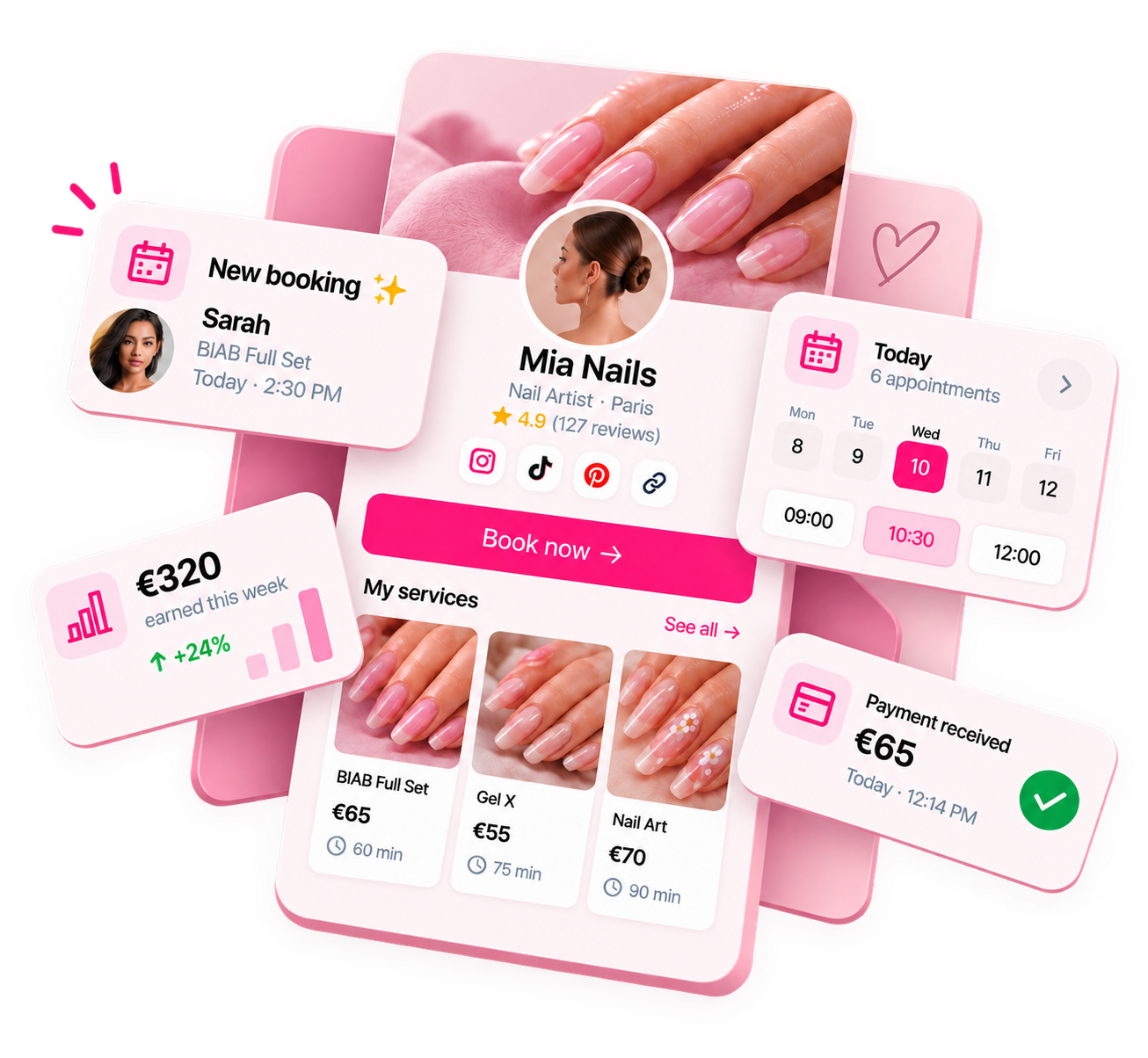
Ready to run your nail business more professionally?
Manage bookings, deposits and payments from one customisable Nelsy booking page.
Start free →Frequently asked questions
Can I claim all these expenses against tax?
In the UK, business expenses that are wholly and exclusively for business use can generally be claimed against self-employment income, reducing your taxable profit. This includes products, insurance, equipment, and training directly related to your nail business. However, tax rules change and your specific situation matters — consult an accountant or check HMRC guidance for your circumstances. This is not tax advice.
How often should I update my expense records?
Monthly is the minimum for staying on top of your finances. Weekly is better — it only takes 10–15 minutes when transactions are fresh. The longer you leave it, the more likely you are to miss expenses and lose track of where you're at financially.
Do I need accounting software or is a spreadsheet fine?
A spreadsheet works well for most independent nail techs starting out. Google Sheets or Excel, organised by category, is simple and free. Dedicated self-employment accounting apps (QuickBooks Self-Employed, FreeAgent, Coconut) offer automation (bank feed import, mileage tracking, tax estimates) that saves time as your business grows. Many nail techs start with a spreadsheet and upgrade when the admin time starts to feel significant.