Signs you might be ready
- Consistently fully booked — you regularly turn clients away because you have no availability
- Your income exceeds your personal needs — you're earning beyond what you need and could absorb a new fixed cost
- You've been fully booked for 3+ months — it's not a fluke; demand is reliably there
- Clients are asking for a "proper" address — working from home is starting to limit your client reach
- You feel limited by your current setup — space, privacy, professional feel, or equipment
- You have savings to cover 3–6 months of rent — for the quiet months or unexpected slow periods
Signs you're not ready yet
- You're not consistently fully booked at your current setup
- Your income is variable month-to-month and you couldn't absorb a bad month plus rent
- You're thinking about a studio because it "feels like the next step" or because others are doing it — not because your client base is demanding it
- You have no savings buffer
- You haven't done the financial calculation on whether you can cover rent
Financial readiness checklist
- Your average monthly nail income (last 6 months) covers rent at 3–4x
- You have 3–6 months of rent in savings as a buffer
- You've calculated the full cost: rent + extra travel + additional supplies + any lease deposits
- You've modelled what a quiet month looks like with the extra rent burden
- You understand the tax implications of the additional business expense
What to look for in a studio space
- Ventilation: Essential for nail work — check if the space has good airflow or can have an extractor fitted
- Accessibility: Client parking, public transport links, ground floor or lift access
- Flexibility of terms: Avoid long leases until you've tested the space
- Included utilities: Confirm what's included in the rent (electricity, Wi-Fi, cleaning)
- Condition of the space: Budget for any setup, decoration, or equipment needed
- Location relative to your existing client base: Moving to a new area may require rebuilding your client base
Common mistakes when taking a studio
- Signing a long lease before testing the space and location
- Taking the studio before having a financial buffer
- Underestimating setup costs (decorating, equipment, signage)
- Choosing a location that doesn't suit your clients
- Expecting the studio to drive new clients — you still need to market
For the transition process: how to transition from home nail tech to a studio.
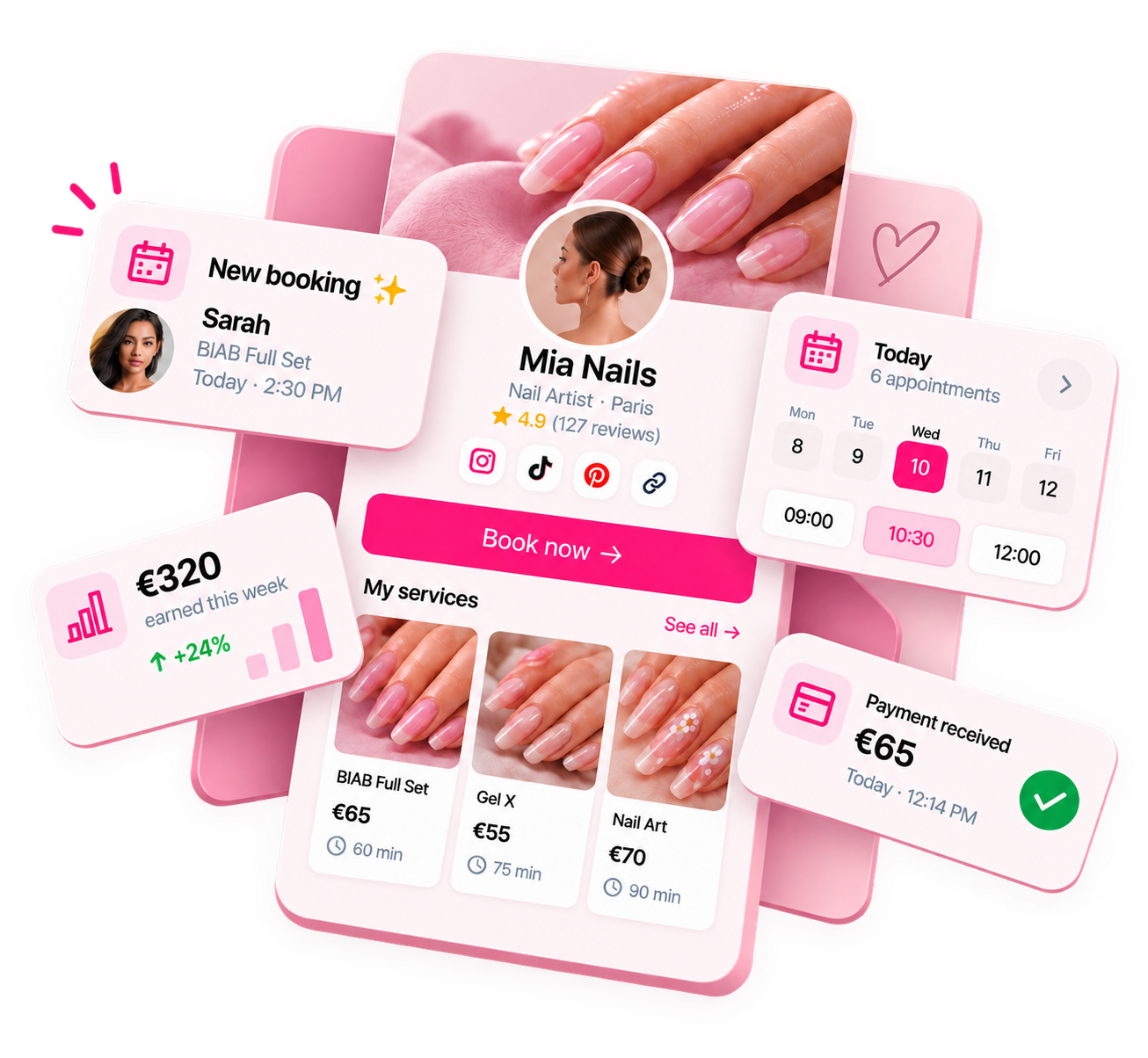
Ready to run your nail business more professionally?
Manage bookings, deposits and payments from one customisable Nelsy booking page.
Start free →Frequently asked questions
How much should I be earning before getting a studio?
A common rule: your rental income should cover at least 3–4x your studio rent. So if rent is £500/month, your nail income should reliably be at least £1,500–£2,000/month before rent to absorb the new cost comfortably. This allows for quiet months, supply costs, and tax without the studio making you financially stretched.
Should I sign a long lease for a nail studio?
Be cautious with long leases — a 12-month lease is a serious financial commitment. If possible, start with a short lease (3–6 months) or a rolling monthly arrangement to test whether the space and location work for you before committing long-term. Many salon suite providers offer flexible terms specifically for independent beauty professionals.