What "independent" actually means
An independent nail tech is self-employed — they set their own prices, manage their own bookings, work their own hours, and keep their own earnings (minus costs and tax). They may work from home, in a rented salon suite, in a shared booth, or mobile.
A nail tech working in a salon is typically either employed (receiving a wage) or renting a chair/booth from the salon owner, in which case they're still self-employed but operating within someone else's space and brand.
Side-by-side comparison
| Factor | Independent | Salon employee |
|---|---|---|
| Income | Keep all revenue minus costs and tax | Wage or commission on services |
| Income ceiling | Uncapped — scales with bookings and pricing | Capped at employment terms |
| Schedule | You set it entirely | Set by the salon |
| Client sourcing | Your responsibility | Partially provided by salon footfall |
| Admin | All your responsibility (booking, payments, tax) | Minimal — handled by employer |
| Supplies | You buy and manage them | Provided by salon |
| Risk | All yours | Employment protections apply |
| Creative freedom | Complete | Within salon brand and services |
Income and earnings
Independent nail techs who build a strong client base typically earn more per appointment than salon employees. The tradeoff is that the income is variable — in early months, it can be lower than employment while the client base builds.
Which path suits you?
Independent suits you if:
- You want maximum earning potential
- You want to set your own schedule
- You're comfortable with admin, marketing, and client acquisition
- You have or are building a client base
- You're okay with variable income, at least initially
Salon employment suits you if:
- You're newly qualified and want to build skills and confidence first
- You want a predictable income and not to deal with business admin
- You prefer being part of a team environment
- You're not yet ready to manage your own client acquisition
The hybrid path
Many nail techs do both — work part-time in a salon (for stable income and footfall) while building independent clients on the side. This reduces financial risk during the early building phase. The arrangement can be formal (with an employment contract that allows side work) or informal — always check your employment contract terms before taking private clients.
Ready to run your nail business more professionally?
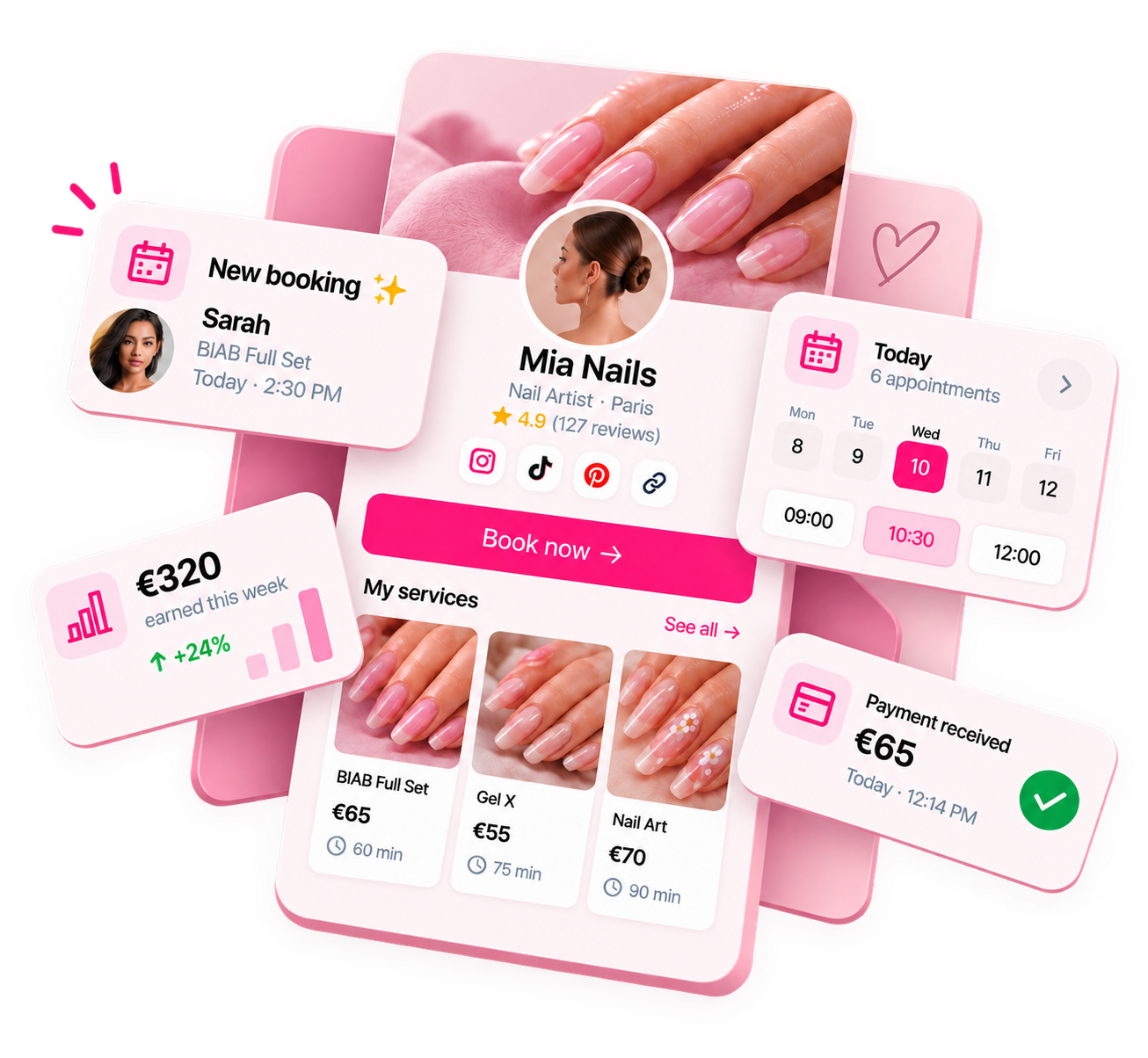
Manage bookings, deposits and payments from one customisable Nelsy booking page.
Start free →Frequently asked questions
Can I start as a salon employee and go independent later?
Yes — and many nail techs do exactly this. Working in a salon first builds experience, confidence, and sometimes a client base. Transitioning to independence later is a well-worn path. The challenge is that salon clients belong to the salon, not to you — you may need to rebuild from scratch rather than taking clients with you.
Is it harder to get clients as an independent nail tech?
Yes, initially. A salon gives you footfall and an established brand. As an independent you build your own audience through Instagram, word of mouth, and your booking platform. This takes time but once built, an independent client base is more loyal and more profitable per client.