
Pros and cons of a home nail setup
| Pros | Cons |
|---|---|
| Lower overheads (no salon rent) | Less separation between work and home |
| No commute | May need planning permission at scale |
| Set your own hours completely | Client footfall in your private space |
| Build a loyal, personal client base | Limited space for expansion |
| Lower startup costs | May be in a lease that restricts commercial use |
For most new nail techs, starting from home is the right call. Lower risk, lower costs, and the ability to build income gradually before committing to rent.
Legal and planning requirements
Before taking clients at home:
- Planning permission: Small-scale home working (few clients per day, no external signage, no structural changes) typically doesn't require it. Check with your local council if in doubt.
- Mortgage/tenancy: Homeowners may need to check their mortgage conditions. Renters must check their tenancy agreement — many explicitly prohibit running a business from a rental property.
- Council tax: If part of your home is exclusively used for business, a small portion may become subject to business rates. For most home nail techs this doesn't apply — you're using a multipurpose room.
- HMRC registration: Register as self-employed before you start earning. Free to do online.
Setting up your home nail space
✓ Home nail studio essentials
- ✓Dedicated table at the right working height (approximately desk height)
- ✓Comfortable chair for you and a client chair that positions hands at correct height
- ✓Good lighting — ring light or dedicated nail lamp is minimum
- ✓Adequate ventilation — nail products have fumes; a window or fan is essential
- ✓Storage for products (organised, clean, accessible)
- ✓Clean, uncluttered background (even just a plain wall) for portfolio photos
- ✓Hand wash and sanitisation station for clients
- ✓Clean towels or disposable nail mats
Insurance for home nail techs
Home nail techs need the same insurance as salon-based nail techs — possibly more, since clients are in your personal space:
- Treatment liability: Covers claims if a client has an adverse reaction to a product
- Public liability: Covers injury claims if a client is hurt in your space
- Products liability: Often included with treatment liability — covers products you sell
Home insurance policies typically don't cover business activities. Check with your home insurer — you may need to add business cover or switch providers. UK providers for nail tech insurance include PolicyBee, Salon Gold, and Markel Direct.
Creating a professional client experience
The main concern with home setups is professionalism. A tidy, intentional space feels professional regardless of whether it's in a home or a salon. What matters:
- Clean, organised work area every time a client arrives
- A clear entry path — don't make clients navigate through your personal living space
- Consistent scent and atmosphere — light a candle, play background music
- No personal interruptions during appointments (family, pets, phone calls)
- A professional confirmation message that includes your address and any parking/access notes
Pricing for a home studio
Home nail techs often undercharge because they feel they "should" charge less than a salon. You shouldn't — your skill, time, and products cost the same. Your overhead is lower, but that's your benefit, not your client's discount.
Price based on your skill level, local market, and cost calculation. Being home-based is a convenience advantage (easier parking, personal atmosphere) — not a reason to underprice. See: how to price nail services for profit.
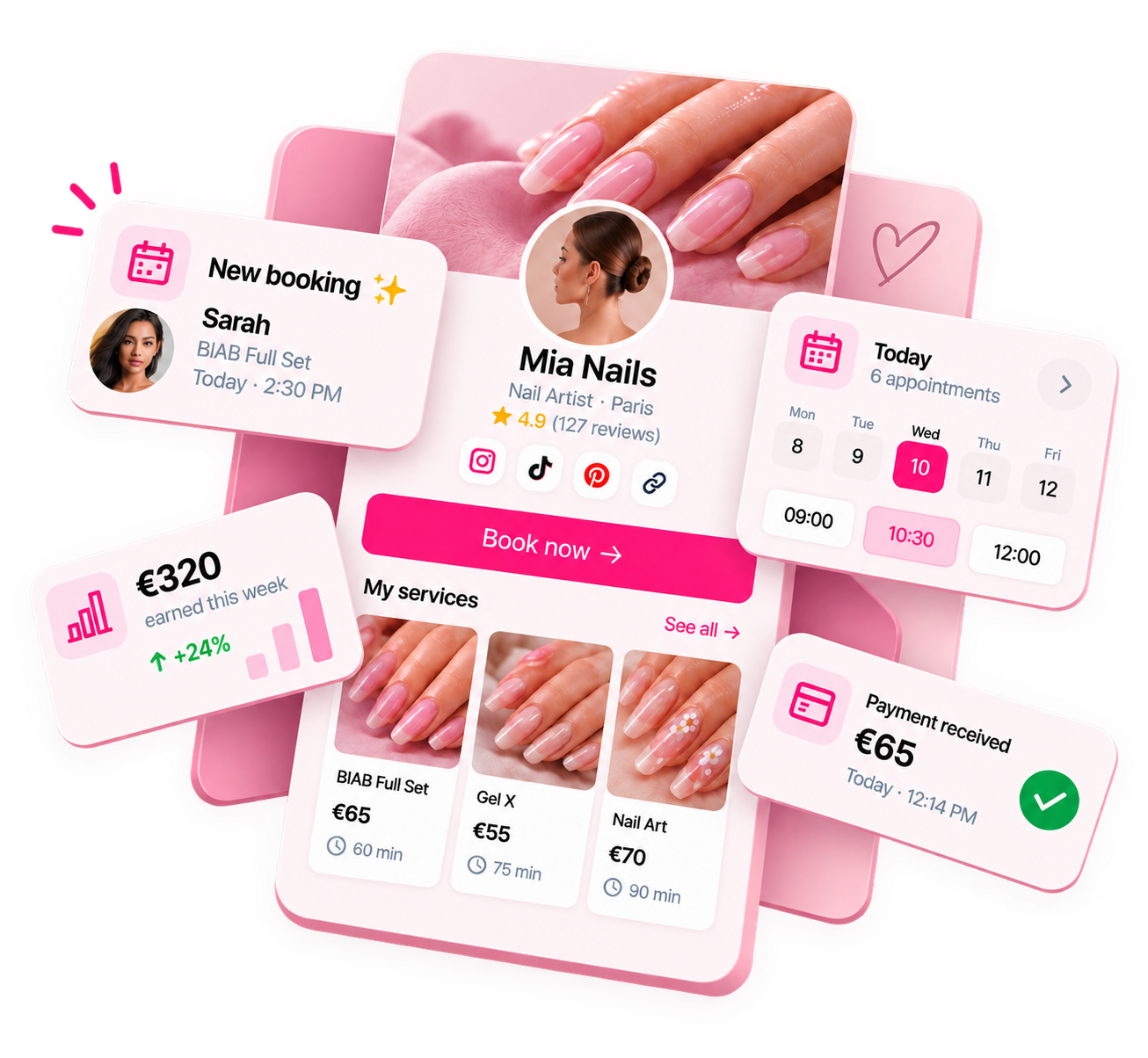
Ready to run your nail business more professionally?
Manage bookings, deposits and payments from one customisable Nelsy booking page.
Start free →Frequently asked questions
Do I need planning permission to run a nail business from home in the UK?
You may need it depending on the scale. Working from a spare bedroom on a small number of clients generally doesn't require planning permission. If you're converting a garage, having significant client footfall, or employing others, you should check with your local council. Renting? Check your tenancy agreement.
Can I put my home address on my Instagram as a nail tech?
You don't need to. Most home nail techs list only their neighbourhood or area (e.g. "East London" or "Didsbury, Manchester") on their public profiles. Your full address can go in the booking confirmation message sent only to confirmed clients.
Do I need a separate room for a home nail business?
Not necessarily — some nail techs work from kitchen tables or a space in a living room. A dedicated space is better for professionalism and helps mentally separate work from home. At minimum: good lighting, a stable table at the right height, storage for your products, and a clean, uncluttered background for photos.