Starting a nail business is one of the more accessible ways to build a self-employed creative career — but "accessible" doesn't mean easy. The nail techs who build sustainable, fully-booked businesses do it by setting up properly from the start: qualifications, insurance, the right equipment, a booking system, and a clear marketing approach.
Step 1: Training and qualifications
Training is the foundation. Even if you have natural talent, technical knowledge of nail anatomy, product chemistry, and application technique protects your clients and your reputation.
Core qualification routes in the UK:
- VTCT or ITEC Level 3 in Nail Technology — the industry standard, widely accepted by insurers
- Brand-specific courses (e.g. BIAB, CND, OPI) — product training with a certification; often taken after a core qualification
- Short courses and masterclasses — nail art, extensions, specific techniques; supplement rather than replace a core qualification
Step 2: Legal and insurance
Before taking a single paying client:
✓ Legal essentials
- ✓Treatment liability insurance (covers adverse reactions to products)
- ✓Public liability insurance (covers injuries in your work space)
- ✓Register as self-employed with HMRC (do this before earning)
- ✓Open a separate business bank account (helpful for tax)
- ✓GDPR: basic client data policy if you store names and contact details
Insurance is available from providers like PolicyBee and Salon Gold, typically under £150/year for a home nail tech. Don't skip it — a single adverse reaction claim without insurance could be financially devastating.
Step 3: Equipment and setup
You don't need a professional salon setup to start, but you need the right tools for safe, professional results. See the complete list: nail tech starter kit — what you actually need.
For home setups: good lighting (a ring light or dedicated nail lamp), a stable table at the right height, adequate ventilation, and a clean professional environment are more important than expensive furniture.
Step 4: Pricing your services
Price based on what you need to earn, not just what others charge. Before setting prices, calculate your monthly costs, target income, and working hours to arrive at a minimum hourly rate. Then set service prices above that floor.
New nail techs often start 20–30% below their target price as they build confidence and clientele, with a plan to raise prices at a specific milestone. See: how much should a nail tech charge?
Step 5: Booking and admin
Set up your booking system before you announce your first availability. A booking page with deposit collection, automatic reminders, and a shareable link saves hours of admin per week and dramatically reduces no-shows.
Step 6: Instagram and marketing
Instagram is the primary marketing channel for most nail techs. A dedicated nail account with your location in the name field, regular portfolio posts, and a booking link in your bio is the foundation.
You don't need a big following to get clients. You need a clear, professional profile that tells local visitors who you are and how to book. See: how to get nail clients from Instagram.
Step 7: Getting your first clients
- 1
Do model sets to build your portfolio
Friends, family, and local Facebook groups for nail models. Free or cost-price. Get high-quality photos of each set. - 2
Post your portfolio on Instagram with location tags
Tag your city and area on every post. Mention your location in captions. Use location-based hashtags. - 3
Ask models to post and refer
After every model set: "Would you mind posting and tagging me? And if anyone asks where you got your nails done..." - 4
Post your booking link and announce availability
"I'm now taking bookings — link in bio." Simple, direct, no over-explanation. - 5
Ask for referrals from first paying clients
"I'm building my client base — if you know anyone looking for a nail tech I'd love a referral."
Full guide: how to get your first 10 nail clients.
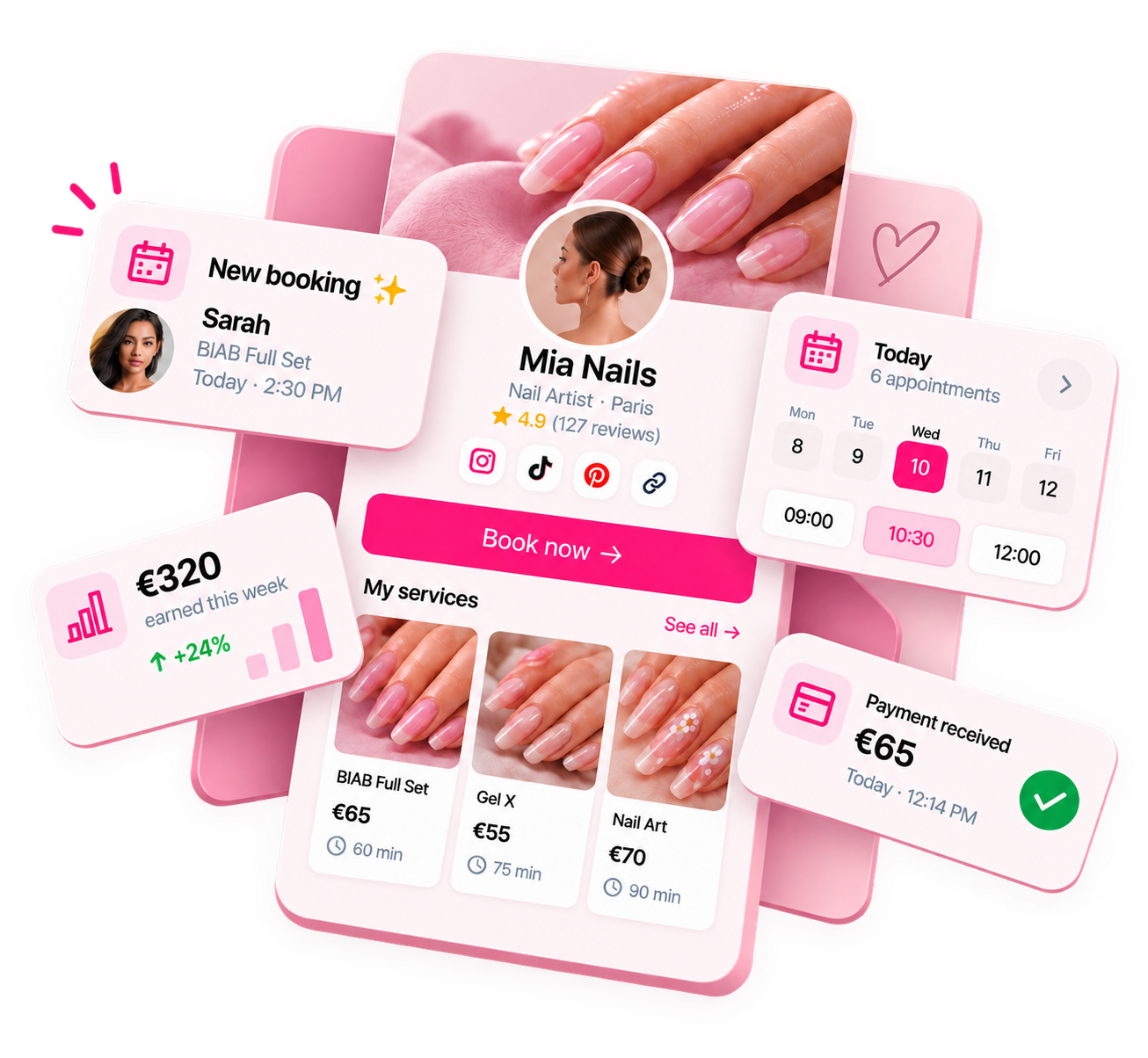
Ready to run your nail business more professionally?
Manage bookings, deposits and payments from one customisable Nelsy booking page.
Start free →Frequently asked questions
How much does it cost to start a nail business?
A basic home nail setup costs £500–£1,500: essential tools, products, lamp, table, and insurance. A more comprehensive starter kit with a full product range and professional equipment runs £1,500–£3,000. You don't need to spend everything upfront — start with essentials and build your kit as income grows.
Do I need qualifications to do nails in the UK?
The UK doesn't legally require a specific nail tech qualification to practise, but qualifications from accredited training providers (VTCT, ITEC, or brand-specific courses) are strongly recommended. Insurance providers require evidence of training, and clients increasingly ask about qualifications.
How long does it take to be ready to take nail clients?
Most nail tech courses take 2–6 weeks for the core qualification, followed by practice on models. Realistically, expect 2–3 months from starting training to being confident enough to charge for your first services. Some nail techs move faster, some take longer — the key is consistent practice.