Why you need a no-show policy
A no-show costs you the appointment fee, the time you held in your diary, and potentially another client you could have booked. Without a policy, there's no financial consequence for the client — so the behaviour continues.
A clear policy, communicated before booking, sets expectations and creates accountability. Most clients never test it. The ones who would have no-showed anyway are deterred by the deposit requirement.
Ready-to-use policy templates
Choose the tone that fits your brand and client base. All can be edited:
Deposit policies
The most effective no-show policy combines a notice requirement with a deposit. The deposit creates financial accountability at booking time; the notice requirement determines what happens to it.
| Scenario | Client cancels 72h+ ahead | Cancels within 48h | No-show |
|---|---|---|---|
| Standard policy | Deposit moved to future appointment | Deposit forfeit | Deposit forfeit; new deposit required |
| Strict policy | Deposit refunded (minus admin fee) | Deposit forfeit | Full appointment fee due |
| Flexible policy | Deposit refunded or moved | First time: grace, second time: forfeit | Deposit forfeit |
For deposit amount guidance: How much deposit should a nail tech charge?
Where to put your policy
Your policy needs to be visible before booking — not tucked away where clients can claim they didn't see it:
- Booking page: A visible policy section before the booking confirmation step
- Booking confirmation message: "Just a reminder of my cancellation policy: 48 hours' notice required..."
- Reminder message: Brief mention in the 24-hour reminder
- Instagram highlights: A "Policies" or "Booking info" highlight
Enforcing your policy
A policy you don't enforce isn't a policy — it's a suggestion. Many nail techs write a clear policy and then feel too awkward to actually keep the deposit when a client cancels late.
Enforce your policy every time. If you make exceptions for some clients and not others, you create inconsistency that clients notice and take advantage of. The policy exists to protect you — use it.
Genuine emergencies (serious illness, bereavement, accident) are different — use your judgement. But "I forgot" and "something came up" are not emergencies.
Handling difficult clients
When a client disputes a forfeit deposit, a calm factual response works best:
Don't engage in extended back-and-forth. State the policy once, offer to rebook, and leave the decision with them. Most clients accept this. The ones who escalate are usually not the clients you want to keep.
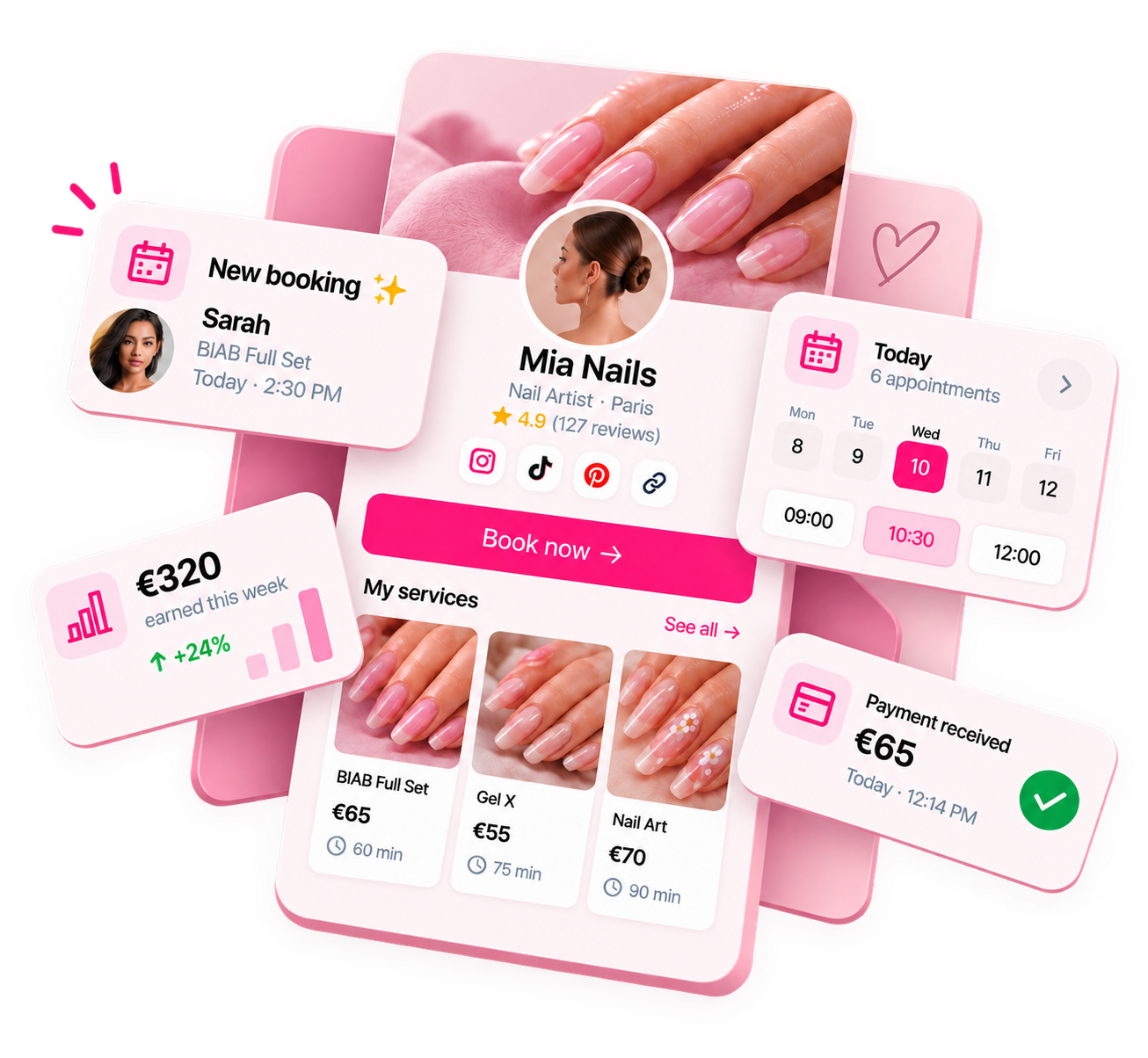
Ready to run your nail business more professionally?
Manage bookings, deposits and payments from one customisable Nelsy booking page.
Start free →Frequently asked questions
Can a nail tech keep a deposit if a client cancels?
Yes — if you have a clearly stated cancellation policy that was visible before booking, and the client cancelled within the notice period you specified, you're entitled to keep the deposit. This is why it's important to have your policy in writing and visible before clients book.
How strict should a nail tech's cancellation policy be?
Strict enough to protect your income, flexible enough to retain good clients. A 48-hour notice requirement with deposit forfeiture for late cancellations/no-shows is the standard. Many nail techs add discretion: a genuine emergency from a long-term client is different from a habitual last-minute canceller.
What should I do when a client no-shows without contacting me?
Wait the appropriate period (usually 15–30 minutes past appointment time), then send a message: "Hi, I had you booked for [time] today. I've had to open the slot for someone else. Please note that no-shows result in your deposit being forfeit. Happy to rebook for a future date." Keep it factual, not emotional.