Why nail techs undercharge
Undercharging isn't usually ignorance — it's fear. The specific fears vary, but they're consistent across the industry:
- Fear of losing clients: "If I raise my prices, my regulars will leave"
- Imposter syndrome: "I'm not experienced/qualified/skilled enough to charge more"
- Comparison paralysis: "The nail tech down the road charges [X] — I can't charge more than that"
- Discomfort with money conversations: "Talking about money feels awkward and I'd rather avoid it"
- Starting low and never raising: "I set my prices when I was a beginner and it just... stayed there"
What undercharging actually costs you
Undercharging isn't "playing it safe" — it has direct costs:
- You work more hours than necessary to hit your income needs
- You attract price-sensitive clients who are less loyal and more likely to leave for cheaper
- You're unable to invest in better products, training, and equipment that would improve your work
- You experience burnout from overwork at insufficient reward
- You feel resentment toward clients who are getting more value than they're paying for
Signs you're undercharging
- You're fully booked but not taking home what you need
- You feel resentful about the time some services take relative to what you charge
- Your prices haven't changed in 12+ months
- New clients book without flinching — no one ever says "that's expensive"
- You feel embarrassed to say your prices out loud
- Calculating your hourly rate reveals you're below minimum wage after expenses
The mindset shift
The most useful reframe: you're not charging for time. You're charging for skill, expertise, a professional result, and the experience of being in your care for an hour. That package has a value independent of how long it takes — and that value increases as your skill grows.
Your prices also signal your positioning. A nail tech charging £28 for a gel manicure and one charging £55 are positioned differently in their market. Neither is wrong — but if you're delivering a £55 experience and charging £28, the mismatch is costing you in revenue and in how clients perceive your value.
Practical steps
- Calculate your required hourly rate — this tells you what you need to charge (see: how to calculate your nail tech hourly rate)
- Compare your current effective rates to your required rates — find the gaps
- Set a new price list and an effective date (give 4–6 weeks notice to existing clients)
- Communicate the change directly and confidently — see the script below
- Raise prices for new clients immediately; apply to existing clients from the effective date
Communicating a price increase
You don't need to justify the increase at length — a brief, warm notice is all that's needed. Clients who respect your work will stay. Those who don't were not the right fit for your business long-term.
Full guide to raising prices: when should a nail tech raise prices.
Ready to run your nail business more professionally?
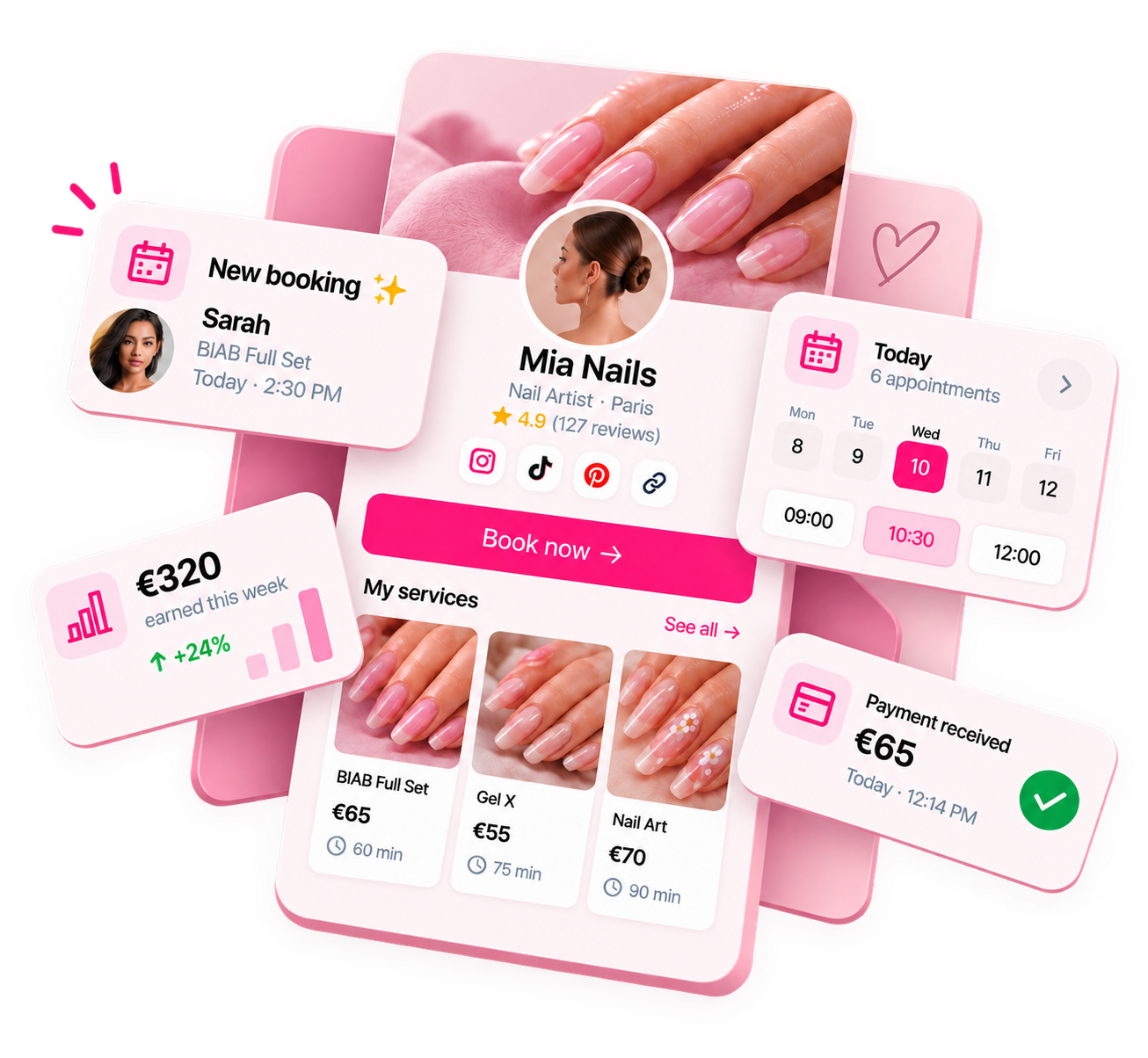
Manage bookings, deposits and payments from one customisable Nelsy booking page.
Start free →Frequently asked questions
Will I lose clients if I raise my prices?
Some clients may not continue when you raise prices — and that's often okay. Clients who leave purely for price were never your most loyal or most profitable. The clients who stay are those who genuinely value your work. Many nail techs find that after a price increase, they retain 90%+ of their regular clients while earning more per appointment — and the emotional relief of charging what they're worth reduces burnout significantly.
How much should I raise my prices by?
Enough to make a meaningful difference to your hourly rate, but not so much that you raise in one jump before clients have time to adjust. A 10–20% increase is common for a first raise, particularly if prices haven't changed in 12+ months. Calculate your required hourly rate first (see the linked article) to understand what your prices actually need to be.
Should I give different prices to existing and new clients?
Most nail techs apply the same prices to all clients rather than creating a two-tier system. Existing clients receiving a lower price creates admin complexity and can feel awkward when it eventually equalises. Give existing clients advance notice of the change and a clear effective date — this is more respectful than surprising them at their next appointment.