Rebook at the end of every appointment
The single most effective thing you can do to reduce gaps is to rebook every client before they leave.
- Make rebooking a standard part of your appointment closing — not optional, not awkward: "Let's get your next appointment locked in now"
- Have your calendar open and ready when the client is paying — make it easy and immediate
- Suggest the interval based on service: infills typically every 3–4 weeks; gel polish every 2–3 weeks
- A client who leaves without rebooking has a 30–40% chance of not returning for 6+ weeks — a client who rebooks is almost guaranteed to return on schedule
Use a cancellation policy that protects your time
- A clear cancellation policy (typically 24–48 hours notice required) reduces last-minute cancellations significantly — clients who know there's a fee are more careful about their bookings
- Enforcing the policy consistently is what makes it work — a policy that's sometimes enforced doesn't change behaviour
- Deposits or card-on-file requirements at booking are the most effective deterrent against no-shows and late cancellations
Run a waitlist for cancellations
- A waitlist is a list of clients who want to be contacted if a slot opens — it converts cancellations into filled appointments automatically
- Ask clients who can't find an available slot to join the waitlist; when a cancellation occurs, work through the list
- Some booking software has a built-in waitlist feature; otherwise a simple message thread or a notes list works fine
- Clients on a waitlist feel cared for rather than turned away — it's a better client experience than just saying "nothing available"
Last-minute slot strategy
- When a gap appears within 48–72 hours, post it to your story or send a message to your waitlist — "cancellation slot available tomorrow at 2pm"
- Don't discount last-minute slots as a default — offer them at full price to waitlist clients first; only consider a small incentive if slots regularly go unfilled
- Keep a list of clients who consistently respond to last-minute availability — these clients are valuable and worth maintaining a direct communication line with
- An Instagram Story of a gap slot consistently performs better than any paid promotion for same-day availability
Weekly schedule review habit
- At the start of each week, look at the week ahead and identify any gaps longer than your standard buffer time
- Any gap larger than 2 hours is an opportunity — contact a client due for their next appointment, reach out to the waitlist, or post availability
- This weekly review takes 5 minutes but prevents gaps from sitting unfilled until the day before
- The further ahead you spot a gap, the more time you have to fill it
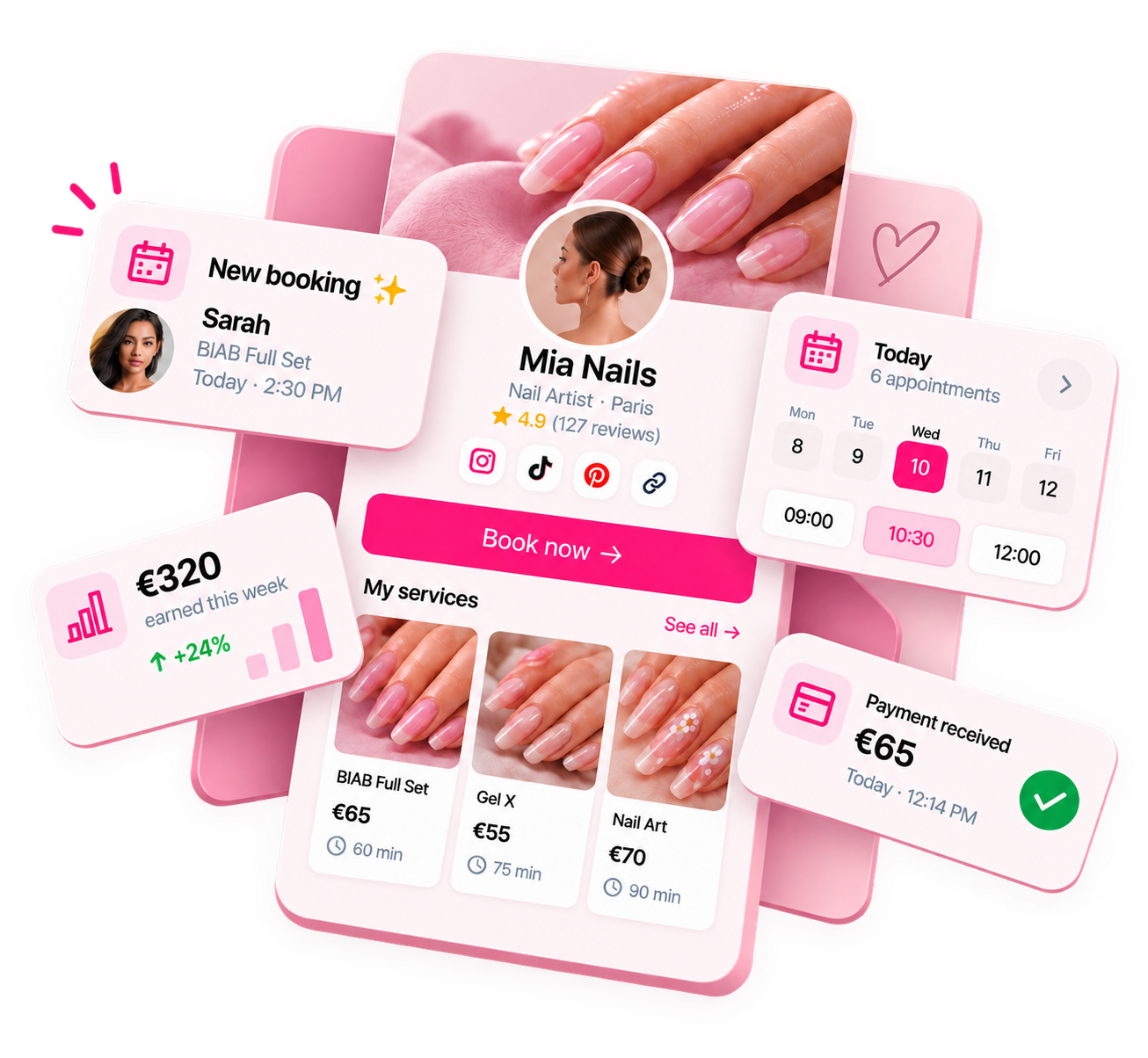
Ready to run your nail business more professionally?
Manage bookings, deposits and payments from one customisable Nelsy booking page.
Start free →Frequently asked questions
What's the biggest cause of gaps in a nail appointment book?
The biggest cause is clients who don't rebook and then don't return until they need a nail emergency. Regular clients who rebook at the end of every appointment are the most consistent income source. The goal is to move as many clients as possible onto a regular rebooking rhythm — 3, 4, or 6 weeks depending on the service.
Should I offer last-minute discounts to fill gaps?
Occasionally, for a proven clientele — but be cautious. Regular discounting for last-minute slots trains clients to wait for a cheaper option rather than booking in advance. A more sustainable approach is a waitlist for cancellations offered at the standard price, communicated as a benefit of being on the list rather than a discount.