Why average appointment value matters
Average appointment value (AOV) is the average amount you earn per client per visit. Increasing it is one of the highest-leverage ways to grow your income because it applies to every single appointment — existing clients, new clients, all services.
| Scenario | Clients/week | AOV | Weekly revenue |
|---|---|---|---|
| Current | 20 | £40 | £800 |
| Price rise of £5 | 20 | £45 | £900 (+£100) |
| AOV increase via add-ons (£7 avg) | 20 | £47 | £940 (+£140) |
| Both changes | 20 | £52 | £1,040 (+£240) |
£240/week extra with the same client count = over £12,000/year additional revenue. That\'s the case for investing in AOV.
Add-ons that work
The best add-ons are quick to apply, have low material cost, and feel like a natural upgrade rather than an upsell:
| Add-on | Extra time | Price | Revenue/20 clients if 50% take it |
|---|---|---|---|
| Chrome / mirror effect | 10–15 min | £12 | £120/week |
| Cuticle oil treatment | 5 min | £6 | £60/week |
| 2-nail art accent | 15 min | £15 | £150/week |
| Nail strengthening treatment | 5 min | £8 | £80/week |
| Glitter overlay | 5 min | £8 | £80/week |
Natural upsell techniques
Other natural moments:
- On your Instagram: Post add-on results with a price mention — clients see what\'s available before they arrive
- During booking confirmation: "You can add chrome or nail art at your appointment — options and prices are on my booking page"
- When a client admires another client\'s nails: "That\'s the chrome effect — it\'s £12 to add — shall we do yours today?"
- On a dry consultation: "Any occasion coming up? Birthday, event? We could do something a bit special."
Pricing architecture
How you structure your prices affects what clients choose. Some principles:
| Principle | Example |
|---|---|
| Anchor with a premium option | Show a "Luxury Manicure (with extras)" at £55 above your standard £38 — makes the standard look like good value, and some clients will choose the premium |
| Bundle vs itemise | A "celebration bundle" (gel + chrome + nail art) at a slight discount sells more add-ons than listing them all separately |
| Price endings | £38 reads differently from £40 — the same applies to add-ons. £12 chrome feels different from £10. |
| Describe before pricing | Name and describe the add-on before showing the price — "Luxe Chrome Effect — a mirror-finish chrome overlay" at £12 rather than just "Chrome £12" |
Rebooking: the invisible revenue lever
A client who books every 3 weeks instead of every 4 weeks represents a 33% increase in annual revenue from that client — without any price change or add-on. Rebooking frequency is one of the most powerful (and underused) AOV levers.
- Mention rebooking at the end of every appointment: "Shall we book your next appointment now? I\'m filling up quickly for [next month]."
- For extension clients: "Your infill will be ready in about 2–3 weeks — want to lock in a slot now?"
- For gel polish clients: "This colour usually lasts about 3 weeks — shall I book you in for then?"
For the full rebooking strategy: how to get more nail client rebookings.
Ready to run your nail business more professionally?
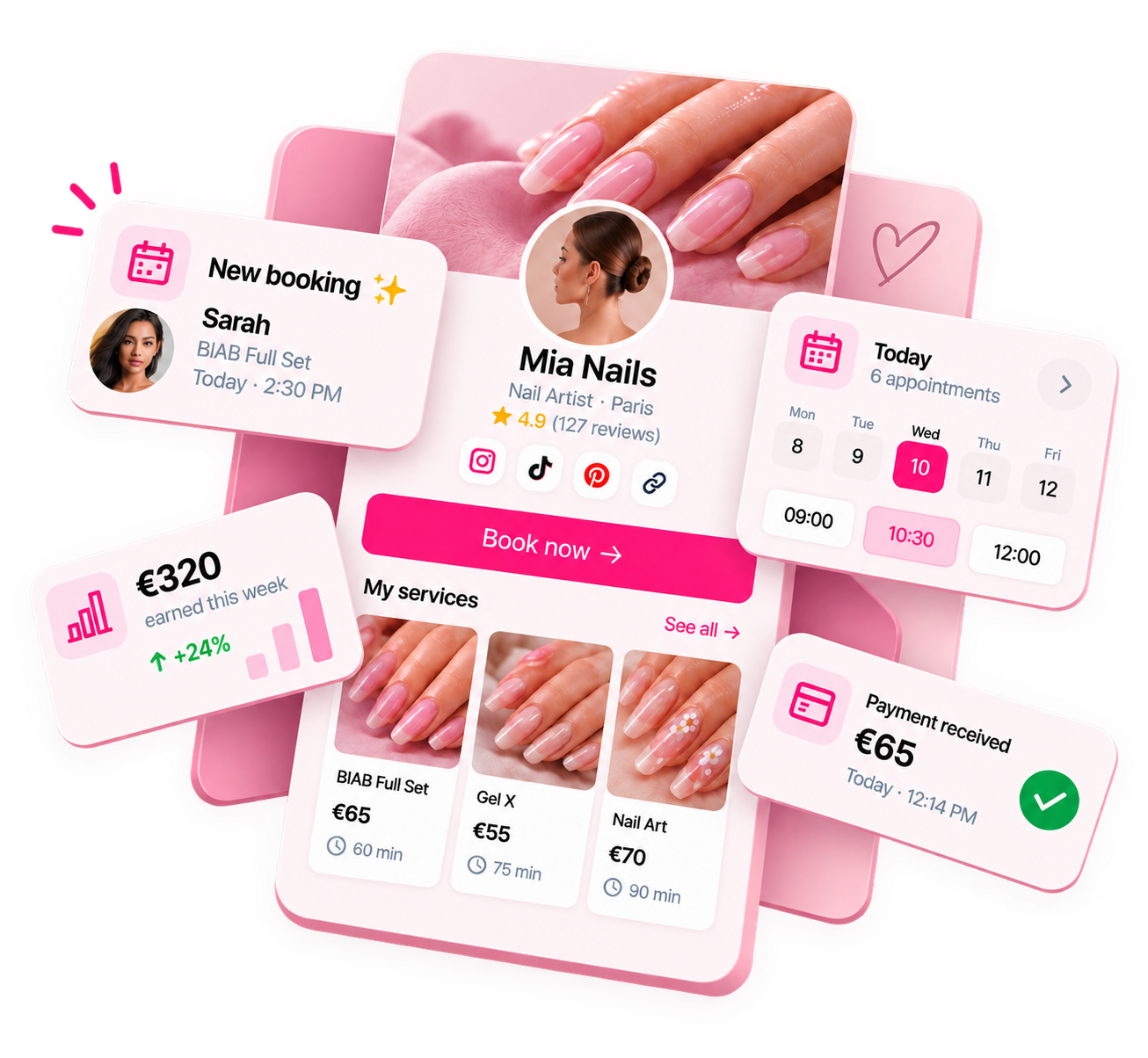
Manage bookings, deposits and payments from one customisable Nelsy booking page.
Start free →Frequently asked questions
Is it pushy to mention add-ons to every client?
No — offering add-ons as options is professional, not pushy. Clients come to you because you're the expert. Part of being the expert is making sure they know what's available. Mention add-ons naturally at consultation ("are you thinking about any extras today?") and leave the decision to the client. A client who doesn't want an add-on will say no; a client who does will appreciate that you asked.
What's the fastest way to increase my average appointment value?
Raise your base prices if they haven't been updated in 12+ months. This affects every single appointment rather than a percentage. After that, consistently offering and pricing add-ons is the next most impactful lever.
Should I try to upsell at every appointment?
Mention add-ons at the consultation of every appointment. Don't repeat the mention mid-service or at payment — once is professional, twice is pressure. The client will remember for next time even if they say no today.